
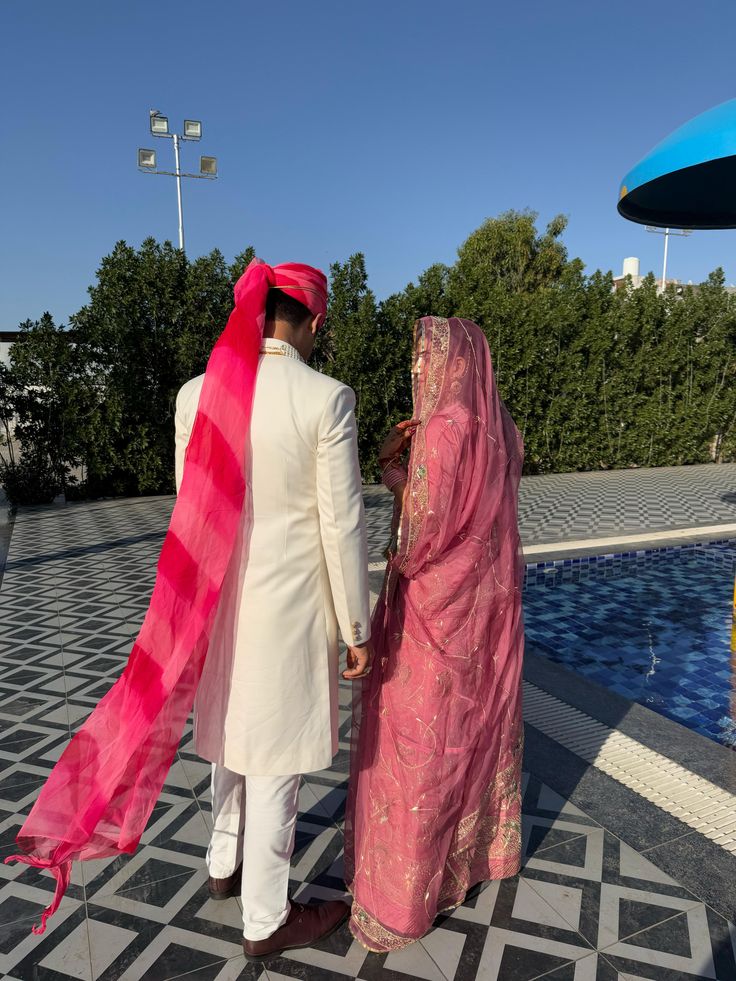
A Rajasthani wedding is not just a celebration—it’s a vibrant explosion of color, culture, and timeless tradition. From the soulful tunes of the shehnai to the royal palaces dressed in marigold garlands, everything about a Rajasthani wedding is grand. But nothing captures its soul quite like the Rajasthani poshak traditional attire that carries centuries of heritage in its folds.
Whether you are a guest, a close relative, or part of the bridal party, dressing appropriately (and beautifully) is essential. In this guide, we’ll walk you through what to wear for a Rajasthani wedding with a complete poshak breakdown for both men and women, plus styling tips for each function.
Understanding the Rajasthani Wedding Aesthetic
Rajasthani weddings blend Rajput grandeur with folk charm. They involve multiple ceremonies spread across days, including:
-
Haldi
-
Mehendi
-
Sangeet or folk night
-
Phere or wedding ceremony
-
Reception/Doli
Each function calls for its own style and level of formality, and the attire changes accordingly.
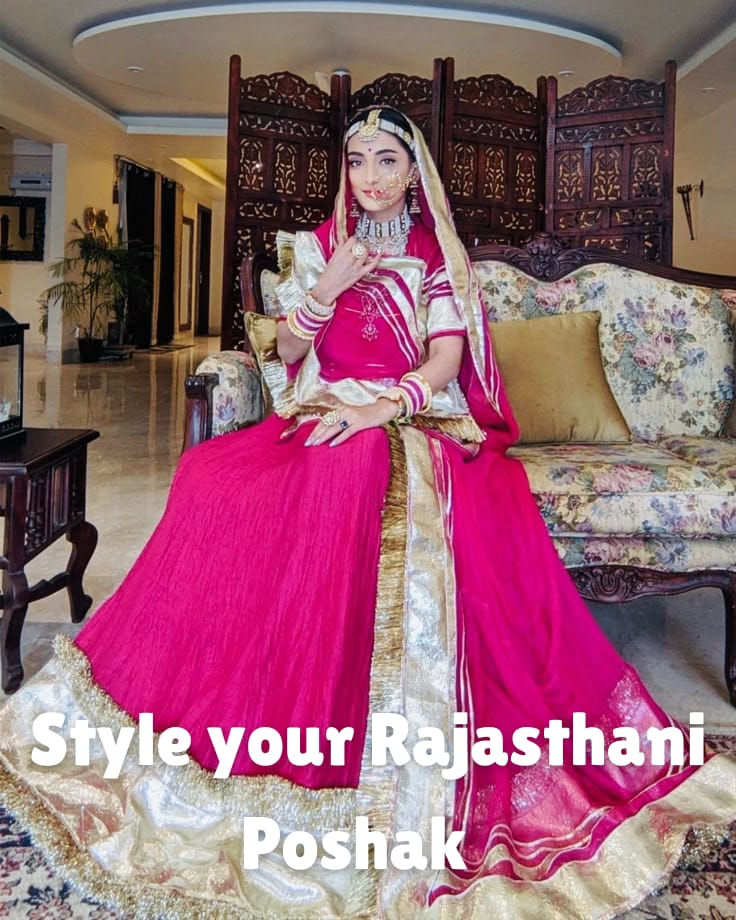
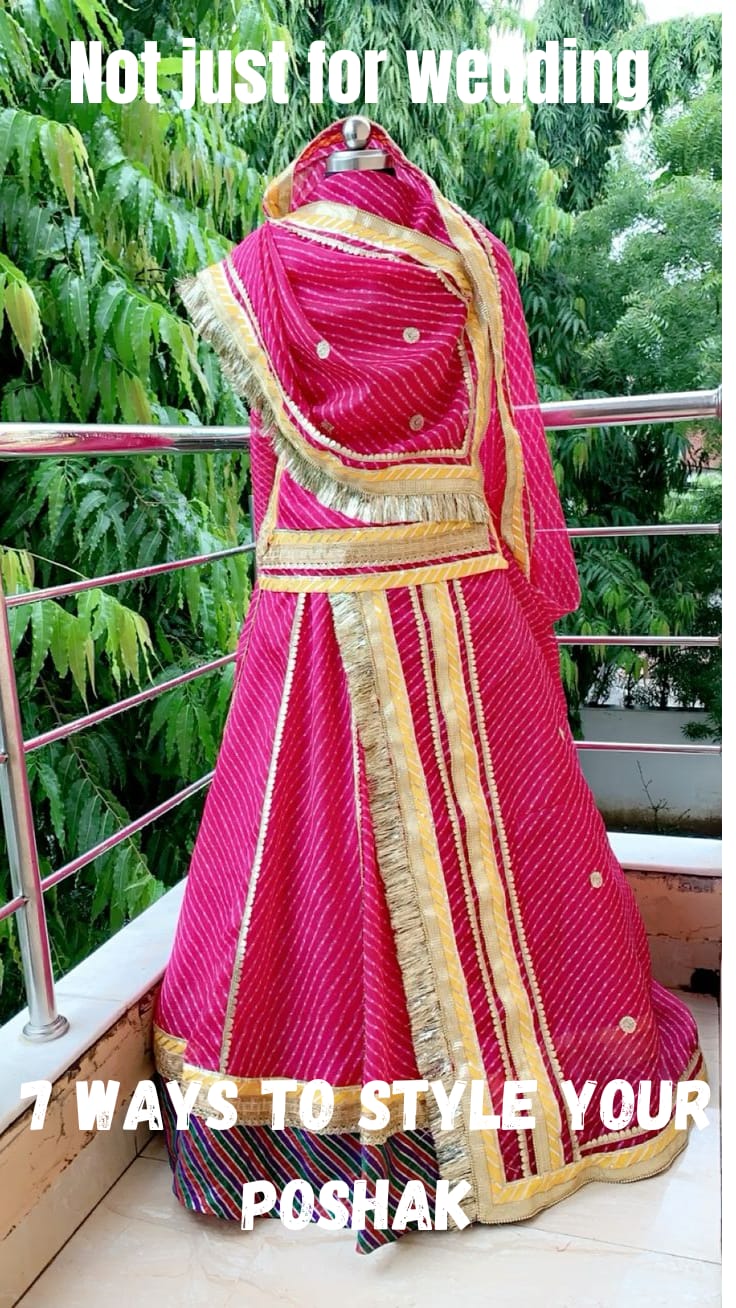
The traditional Rajasthani poshak is designed for both elegance and symbolism. For women, this means embroidered lehengas, mirror work dupattas, and ornate jewelry. For men, regal safas (turbans), angarkhas, and dhotis or jodhpurs complete the royal look.
For Women: What to Wear at a Rajasthani Wedding
1. Bridal Wear (Dulhan ka Poshak)
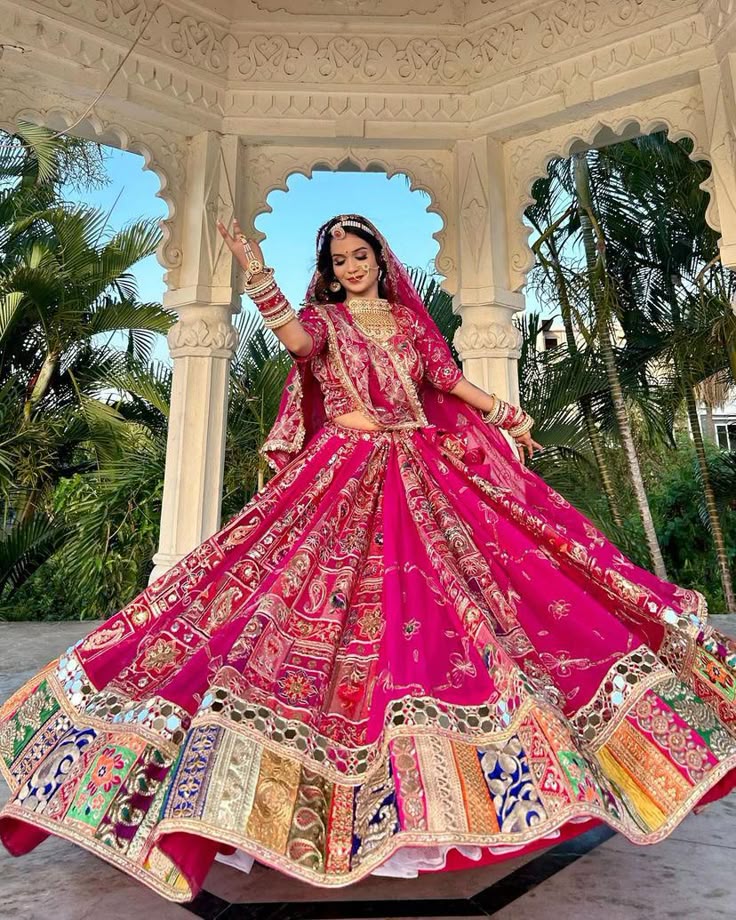
The Rajasthani bridal poshak is perhaps one of the most stunning wedding outfits in India. It traditionally includes:
-
Ghagra: A long, flared skirt, usually in rich shades like red, maroon, or orange.
-
Choli: A fitted blouse, often with mirror work or heavy embroidery.
-
Odhni or Dupatta: Draped over the head and shoulder, heavily embellished with gota-patti, zardozi, or bandhej (tie-dye).
Color & Fabric
-
Colors: Red is classic for brides, but orange, pink, and magenta are also common.
-
Fabric: Silk, brocade, and velvet are used for weddings; cottons and georgettes for lighter functions.
Jewelry
-
Borla (Maang Tikka) – Forehead ornament.
-
Rakhdi, Sheeshphool – Head accessories.
-
Kundan necklace, Nath (nose ring), Bajubandh (armlet).
-
Chooda/Bangles, Payal (anklets), and toe rings complete the bridal set.
2. Bridesmaids and Close Female Relatives
You don’t need to go as heavy as the bride, but you should still keep it traditional and eye-catching.
Haldi Look
-
Simple lehenga-choli in yellow or mustard with light gota work.
-
Cotton or georgette dupattas with a bright border.
-
Floral jewelry or light silver/gold bangles.
Mehendi or Sangeet Night
-
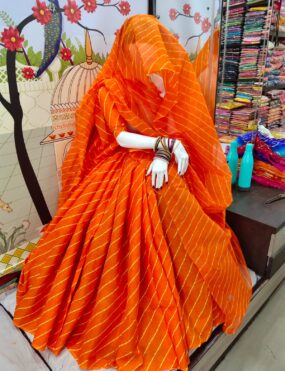
Go bold with Bandhani lehengas, mirror work, or leheriya prints.
-
This is the time to wear those boho oxidized silver sets, jhumkas, and mojris.
Wedding Day
-
Choose a silk or brocade lehenga with traditional handwork.
-
Rich tones like emerald green, royal blue, or maroon work beautifully.
-
Drape the dupatta Rajasthani-style, with pleats and head covering if needed.
Reception or Doli
-
Opt for an elegant saree or lighter lehenga in pastel tones.
-
Embroidered net, tissue silk, or organza are good modern options with Rajasthani borders or embellishments.
For Men: What to Wear at a Rajasthani Wedding
1. Groom (Dulha ka Poshak)
The groom’s poshak is no less regal than the bride’s and is heavily influenced by Rajput royal traditions.
Essential Elements
-
Angarkha: A long flared tunic, either asymmetrical or wrap-style.
-
Dhoti, churidar, or Jodhpuri breeches.
-
Achkan or Sherwani: Modern grooms often prefer an achkan or a sherwani with Rajasthani embroidery.
-
Safa or Pagdi: The centerpiece of a groom’s attire. Often bright pink, saffron, or golden, with a sarpech (turban brooch).
Accessories
-
Kamarbandh (waistbelt) for added elegance.
-
Sword or kirpan – Traditionally carried by Rajput grooms.
-
Mojari (traditional shoes) in matching fabric or leather.
-
Pearl mala or a layered necklace for that royal flair.
2. Groomsmen and Family
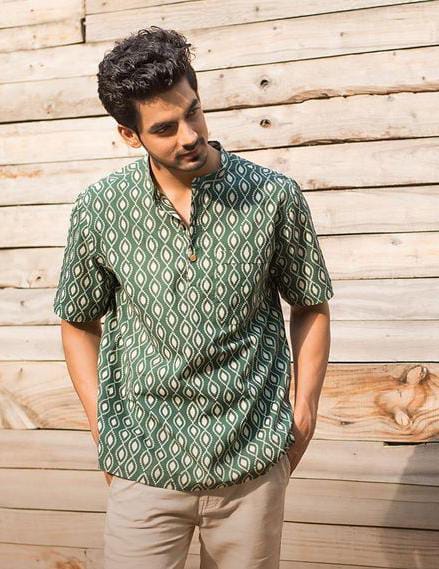
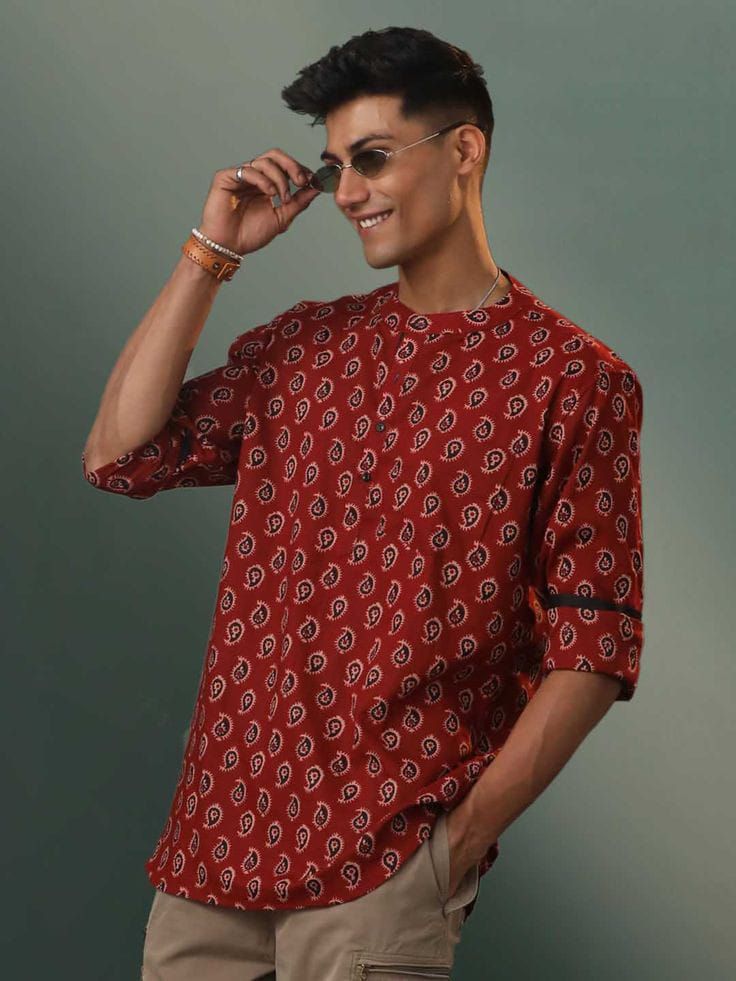
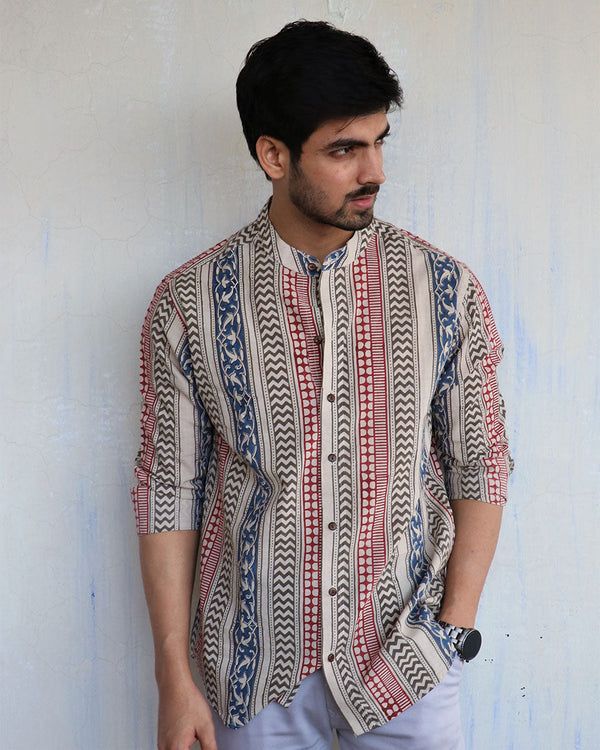
Close male relatives often dress in colorful kurtas, safas, and Nehru jackets.
Haldi Look
-
Yellow cotton kurta with white pyjama or dhoti.
-
A light turban is optional but adds a nice touch.
Mehendi or Folk Night
-
Embroidered kurta or angarkha in bright colors like green, blue, or orange.
-
A colorful printed bandhani safa lifts the whole look.
Wedding Ceremony
-
Choose a light sherwani or embroidered kurta.
-
Pair with a printed or embellished safa.
-
Gold-toned mojaris or jootis for a polished finish.
Reception
-
Jodhpuri suits, bandhgalas, or classic Indo-western attire work well here.
-
Opt for darker tones like black, navy, or charcoal with subtle embroidery.
Styling Tips for a Traditional Rajasthani Wedding
💡 For Women:
-
Always balance heavy lehengas with lighter dupattas or vice versa to stay comfortable.
-
Invest in comfortable footwear many wedding venues in Rajasthan are palace-style or involve open courtyards.
-
Use two dupattas for a more regal bridal look one over the shoulder, the other over the head.
-
Don’t skip the bindi and kajal they are subtle but significant in traditional Rajasthani aesthetics.
💡 For Men:
-
The fit of the kurta or sherwani is crucial too loose and it looks sloppy; too tight and it’s uncomfortable.
-
Coordinate your safa color with your outfit or your partner’s attire.
-
Avoid mixing too many bold prints unless done skillfully.
-
Keep a handkerchief or pocket square handy; it adds charm and is useful in the desert heat.
Sustainable & Modern Twists
If you’re eco-conscious or a minimalist, consider:
-
Renting poshaks from local Rajasthani designers.
-
Choosing handloom cottons with traditional prints.
-
Wearing fusion outfits like a Bandhej crop top with a skirt, or a kurta with jeans for pre-wedding functions.
Where to Buy or Rent Traditional Rajasthani Poshaks
Popular Places:
-
Jaipur – Johari Bazaar, Tripolia, and local boutiques
-
Udaipur – Hathipol, Jagdish Chowk
-
Jodhpur – Sojati Gate, Clock Tower Market
Look for Bandhej, Gota-Patti, Zardozi, and Hand-block prints. Many stores offer customization, and even online options now deliver authentic poshak pan-India and globally.
Final Thoughts: Dress Like You Belong
Attending a Rajasthani wedding is a chance to experience one of India’s richest cultural traditions and your attire plays a huge role in that experience. Dressing in Rajasthani poshak is not just about looking beautiful or handsome; it’s about participating in a living heritage. When you dress the part, you show respect, joy, and connection to the culture around you.
So whether you’re swirling in a bandhani lehenga under a desert sky or adjusting your safa in front of a sandstone haveli, know that your clothing tells a story a story of royalty, color, and celebration that Rajasthan has preserved for generations.
Need help styling or selecting your poshak? Let us know in the comments!